Facing an employee lawsuit can be a stressful and complex experience for any business owner. Allegations of discrimination, wrongful termination, earnings disputes, harassment, or other employment-related claims can carry severe financial, operational, and reputational consequences. At Gross Law Group in Melbourne, our experienced employment attorneys help employers develop effective defense strategies to protect their business and navigate the legal process with confidence.
Understanding the risks and potential outcomes of an employment lawsuit is the first step in mounting a strong defense. Employers who act proactively, gathering documentation, preserving evidence, and engaging legal counsel early, are in a better position to respond effectively and reduce exposure. In many cases, early intervention can prevent disputes from escalating, encourage settlement, or facilitate alternative dispute resolution methods such as mediation or arbitration.
Our employment attorneys work closely with clients to assess claims, identify defenses, and use strategies that align with both legal obligations and business goals. We guide employers through each stage of litigation, from responding to complaints and conducting internal investigations to negotiating settlements or representing clients in court. Contact us to discover how we can assist you. Being proactive is a must.
Key Takeaways About Defending Against Employment Lawsuits
- Employment lawsuits can be very damaging to your company, both legally and in terms of your reputation.
- You must take it very seriously when an employee sues you, and engage in the legal process early.
- Consider alternative dispute resolution as a means of resolving a lawsuit, although there are times when you must take a legally aggressive strategy.
- In the meantime, you must prepare for a trial by maintaining your documentation and evidence and working with an employment law attorney.
- You should speak to an employment lawyer early in your case to learn how they can help.
You Must Be Mindful of Your Reputation
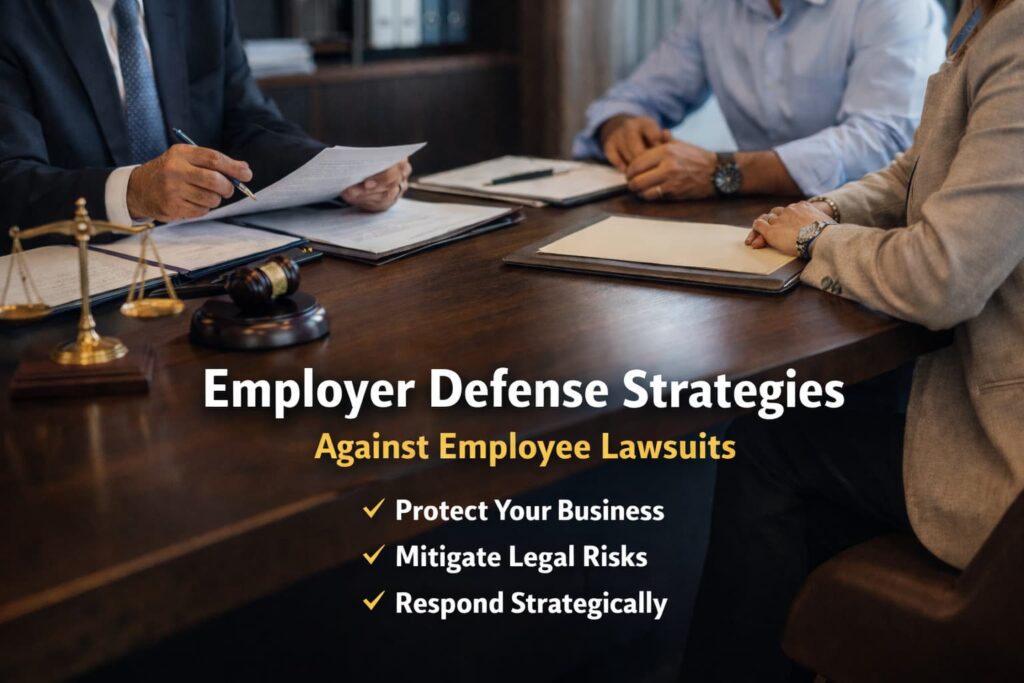
As an employer, you must be aware of the fact that protecting your business means not only avoiding liability in a lawsuit, but it also means safeguarding your reputation. Several groups of people may be watching when employees sue your company in a high-profile lawsuit. Your customers may hesitate to continue doing business with you if your business is in the headlines for the wrong reasons. Then, potential employees are also keeping tabs on your reputation as a place to work. Negative publicity from lawsuits can impact both your recruitment and retention efforts, and you may even lose existing employees who are well aware of what is happening within the company. All of these make having effective defense strategies a must when an employee is suing you.
You Must Engage Early When an Employee Is Filing a Lawsuit
When an employee decides to file a lawsuit, employers must engage early rather than wait for the matter to escalate. Early involvement allows you to address the issue proactively, gather necessary information, and protect your business from unnecessary risk. Ignoring the situation or delaying action can lead to missed opportunities to resolve the dispute informally, increase legal exposure, and make the eventual litigation more costly and complicated.
The first step is to review the allegations carefully. Understand the employee’s claims, identify relevant policies, and collect documentation, such as performance records, communications, and internal investigations. Early engagement also allows for communication and negotiation, which may lead to a settlement or alternative dispute resolution before the matter reaches court. You can save time and legal fees, and also preserve workplace morale and confidentiality.
Additionally, involving legal counsel from the outset ensures compliance with employment laws and prevents mistakes that may strengthen the employee’s case. A lawyer can guide the company through appropriate responses, deadlines, and potential risk mitigation strategies.
Ultimately, acting promptly demonstrates that your organization takes employee concerns seriously while protecting its interests. Early engagement increases the likelihood of a favorable resolution, mitigates the lawsuit's impact, and positions the company to respond strategically if litigation becomes unavoidable.
You Must Hire an Employment Law Attorney Immediately
When an employee files a lawsuit, time is of the essence for an employer. Hiring an experienced employment attorney quickly can make the difference between effectively managing the claim and facing unnecessary legal and financial exposure. Employment lawsuits can escalate rapidly, and the earlier you involve legal counsel, the better prepared your organization will be to respond strategically.
One of the main advantages of hiring an attorney early is immediate guidance on legal obligations and deadlines. Employment claims often involve strict timelines for responses, document production, and court filings. Missing a deadline or mishandling communications can severely damage your case. An attorney ensures that your company complies with all legal requirements while protecting sensitive information.
Early legal involvement also enables a thorough investigation and the preservation of evidence. This investigation includes gathering personnel files, internal communications, performance reviews, and witness statements. Acting quickly ensures that critical evidence is not lost or compromised, which can be decisive in defending your position.
Consider Alternative Dispute Resolution in Your Case
When faced with an employment lawsuit, considering mediation or alternative dispute resolution (ADR) can be an effective strategy for resolving the dispute while minimizing costs, stress, and disruption to your business. ADR processes, including mediation, arbitration, and negotiated settlements, provide a structured yet flexible approach that can often resolve conflicts more quickly than traditional litigation.
Mediation involves a neutral third-party mediator who facilitates discussions between the employer and employee. The mediator helps both sides communicate effectively, identify the key issues, and explore mutually acceptable solutions. Unlike court, mediation is informal, confidential, and focused on collaboration rather than confrontation, making it a valuable tool for preserving workplace relationships and protecting your company’s reputation.
Arbitration is another form of ADR where a neutral arbitrator hears the arguments and evidence and issues a binding decision. While more formal than mediation, arbitration is typically faster and less expensive than going through a full trial. Both mediation and arbitration can provide predictability, limit public exposure, and reduce the emotional and financial strain of prolonged litigation.
Early consideration of ADR enables an employer to control the process, explore creative solutions, and avoid the lengthy discovery and trial preparation that often accompany traditional litigation. Engaging legal counsel experienced in employment law ensures that any ADR strategy aligns with your company’s legal obligations and long-term interests.
Mediation and ADR can help employers resolve employment disputes efficiently, protect business operations, and achieve outcomes that may not be available through litigation, making them a critical consideration in any employment defense strategy.
Maintain Documentation and Evidence That Can Help in Your Defense
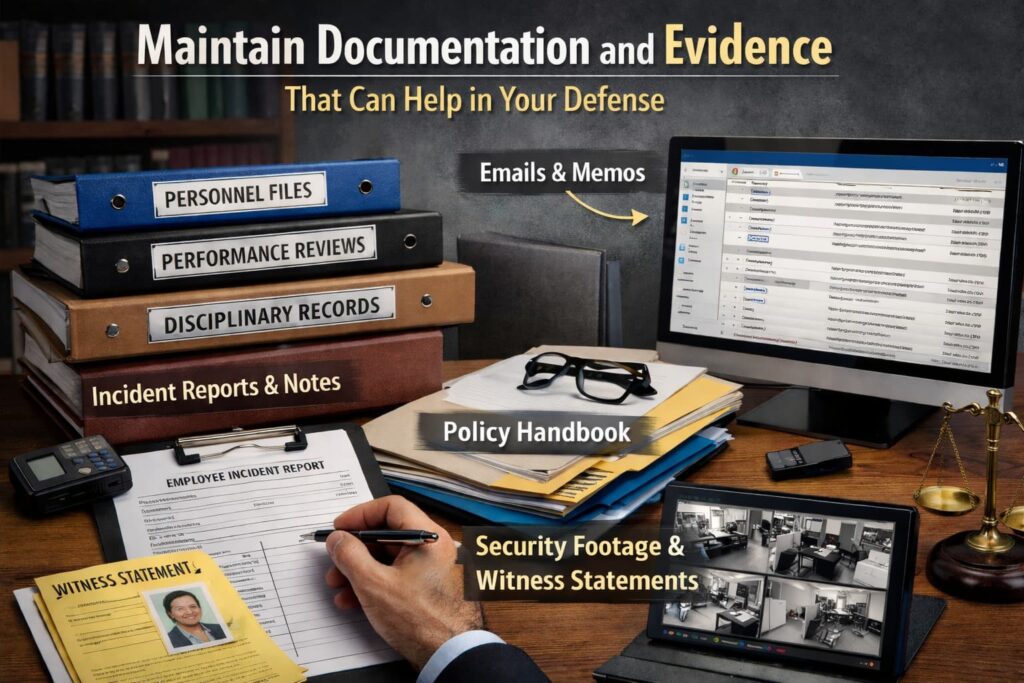
Maintaining thorough documentation and evidence is one of the most critical steps an employer can take to defend against an employee lawsuit. Clear, organized records provide a factual basis to support your decisions, demonstrate compliance with employment laws, and refute any false or exaggerated claims.
Key documentation includes employee personnel files, performance evaluations, disciplinary records, attendance logs, and internal communications such as emails or memos. Having a clear record of workplace policies, training materials, and any signed acknowledgments by employees is also essential. These documents help establish that your company acted fairly and consistently in its employment practices.
It is equally important to document incidents as they occur. Notes on workplace meetings, conversations, or conflicts, preferably dated and signed, can provide valuable context in case of disputes. Witness statements and corroborating evidence, such as security footage or electronic records, further strengthen your position.
Regularly auditing and securely storing these records ensures they are readily accessible in the event of legal action. Proper documentation not only supports your defense but also demonstrates a proactive commitment to compliance and accountability.
Working with an experienced employment attorney can help you identify which records are most relevant, ensure proper retention, and guide you in maintaining documentation that strengthens your ability to defend against employee claims effectively.
Take an Aggressive Legal Approach When Necessary
While negotiation and alternative dispute resolution can resolve many employment disputes, there are situations where an employer must take an aggressive legal approach to defend against employee lawsuits. Acting decisively can protect your business from financial loss, reputational harm, and potential precedent-setting claims.
An aggressive legal strategy begins with early engagement of experienced employment counsel. Attorneys can immediately assess the strength of the employee’s claims, identify potential defenses, and develop a response that maximizes your position. They will file timely motions, challenge procedural errors, and gather compelling evidence to support your case.
Documented workplace policies, performance records, communications, and other evidence become crucial in an assertive defense. Legal counsel can leverage this documentation to counter allegations and demonstrate that your company acted reasonably and in accordance with employment law.
In some cases, an aggressive approach may also involve pursuing counterclaims when an employee’s actions harm the company, such as breaches of non-compete agreements, misappropriation of trade secrets, or defamation. These counterclaims can shift the legal balance and lead to a more favorable resolution.
Aggressively defending a claim does not mean being reckless or confrontational; it means strategically protecting your interests while adhering to legal and ethical standards. By taking prompt and decisive action, employers can limit exposure, deter frivolous claims, and position themselves for the best possible outcome, whether through litigation, settlement, or alternative dispute resolution.
Do Not Act Emotionally When You Are Facing a Lawsuit
When facing an employment lawsuit, it is critical to resist the urge to act emotionally. Reacting impulsively, whether through heated emails, confrontational meetings, or hasty decisions, can escalate the conflict and potentially harm your legal position. Employees may document emotional responses and use them against you in court or during negotiations. Instead, remain calm, gather facts, and consult with an experienced employment attorney before taking any action. A measured, strategic approach ensures that your responses protect your business, comply with legal obligations, and position you to defend your interests effectively throughout the dispute.
How a Melbourne Employment Lawyer Can Help When You Are Facing a Lawsuit
When an employee files a lawsuit, the situation can quickly become complex, stressful, and costly for a business. An experienced employment lawyer can provide critical guidance and advocacy, helping employers navigate the legal process while protecting their rights and minimizing potential exposure.
One of the primary ways an employment attorney can assist is by evaluating the claim and identifying potential defenses. They review the facts, employment records, workplace policies, and communications to determine whether the employee’s allegations have merit and develop a strategy to effectively counter the claims. This early analysis is vital for understanding potential risks and planning an adequate response.
Employment lawyers also handle all legal filings, communications, and court deadlines, ensuring that the employer meets procedural requirements and avoids mistakes that may harm the defense. They can represent the company in negotiations, mediations, or settlement discussions, helping to achieve favorable outcomes without the need for prolonged litigation.
In cases where litigation is unavoidable, attorneys provide strategic courtroom representation, present evidence, cross-examine witnesses, and advocate vigorously on behalf of the employer. They can also advise on risk mitigation, such as documenting workplace policies, correcting internal practices, or taking steps to prevent similar disputes in the future.
Beyond the immediate lawsuit, an employment lawyer helps employers understand legal obligations and best practices, reducing the risk of future claims. By engaging counsel promptly, businesses gain a knowledgeable advocate who guides them through the process, protects their interests, and works toward a resolution that minimizes financial and operational disruption. Contact a knowledgeable attorney at the Gross Law Group in Melbourne, to get the legal help you need.
Frequently Asked Questions About Defending Employment Lawsuits
What types of employee lawsuits are most common?
Common claims include wrongful termination, discrimination, harassment, earnings and hour violations, retaliation, and breach of employment contract.
Should I settle an employee lawsuit or fight it in court?
It depends on the case. Settlement may save time, cost, and reputational damage. Litigation may be preferable if the claim is weak or if the employee is setting a precedent that may be detrimental to the organization.
How can I limit my exposure to potential damage?
Mitigation strategies include corrective measures, training, adherence to policies, and insurance coverage. Acting proactively can reduce liability and demonstrate compliance with employment laws.