Brand deals and sponsorships are a significant source of income for social media influencers, but they also come with legal obligations that can have lasting consequences. Too often, influencers sign contracts that appear straightforward, yet contain provisions that impact payment, content ownership, exclusivity, and liability long after a campaign is over.
Understanding these agreements is essential to protecting both your brand and your business.
At Gross Law Group, our business contracts lawyers work with influencers at every stage of their careers to help them navigate the legal side of brand partnerships. Influencer contracts are not just about posting content. They define who owns your work, how people can use it, when and how you get paid, and what happens if a dispute arises. Without proper legal review, influencers may unknowingly give up valuable intellectual property rights or accept terms that limit future opportunities.
From negotiating fair compensation and usage rights to understanding exclusivity clauses and FTC compliance requirements, having the proper legal guidance can make a significant difference. With the support of an experienced business contracts lawyer, influencers can confidently enter into brand deals, avoid costly mistakes, and build sustainable careers with the added protection of legal representation. Call Gross Law Group to learn how a business contracts attorney can help protect you.
Key Takeaways About Social Media Influencer Contracts
- Social media influencers should protect themselves through a contract with the brand that is paying them.
- Social media influencers may have more leverage than they think to negotiate a contract.
- There are numerous key provisions that you must have in a social media influencing contract to achieve complete protection for yourself.
- The contract that you sign is legally binding, and you can sue, or other parties can sue you on its basis.
- Speak to a business contracts lawyer to learn how you can negotiate contracts with brands that pay you for social media influencing.
Why Influencers Need Protections

In today’s digital economy, influencers, whether on Instagram, TikTok, YouTube, or other platforms, face a unique set of legal risks that make legal protection essential. While influencers may seem like content creators enjoying flexible work and massive reach, the reality is far more complex. Their public presence exposes them to contract disputes, intellectual property issues, and regulatory scrutiny that can have serious financial and reputational consequences.
One of the primary legal challenges influencers encounter is contractual obligations. Brand deals, sponsorships, and collaborations often involve detailed contracts with strict deliverables, deadlines, and non-compete clauses. Without proper legal guidance, influencers may inadvertently breach a contract, leading to penalties, loss of income, or lawsuits. A lawyer can review, negotiate, and draft agreements that protect the influencer’s rights while ensuring compliance with brand expectations.
Intellectual property (IP) concerns are another critical area of concern. Influencers often incorporate music, images, or other creative content into their posts. Copyright infringement claims can result in takedown notices, fines, or even lawsuits. Legal counsel can help secure licenses, protect original content, and defend against infringement claims.
Regulatory compliance is increasingly important. The Federal Trade Commission (FTC) requires influencers to disclose paid promotions and endorsements clearly. Failure to comply can result in fines and reputational damage. A legal professional can advise on disclosure requirements, ensuring that content adheres to current regulations.
Finally, influencers may face defamation, privacy, or online harassment claims. Legal protection enables individuals to respond appropriately, pursue damages if necessary, and safeguard their personal and professional reputations.
In short, influencers operate in a high-stakes, public arena where one misstep can have significant consequences. Legal protection is not a luxury. It is a necessity, providing guidance on contracts, IP, compliance, and liability, allowing influencers to focus on creating content while minimizing risk.
Key Components of Social Media Influencer Contracts
It is not enough to have a contract as a social media influencer, as it will not be effective in fully protecting you if it does not have all of the necessary terms.
Here are some terms that you should consider including in your contract:
- A scope of work that clarifies expectations, including the number and types of posts that you must make. The scope of work may also dictate the format and requirements for the individual posts.
- The compensation you are to receive for your posts, including both the amount and the schedule on which you will get paid. You may receive a fee per post or a single flat fee for all your services.
- Intellectual property clauses that specify who owns the content created and how others can use it. Consider negotiating the protection of your own IP rights related to your brand.
- Clauses that mandate that the influencer adhere to any regulatory requirements, including those that state that they are a paid influencer, along with any other specific industry disclosure rules.
- Exclusivity clauses that dictate whether the influencer has restrictions from working with competing brands during or after the campaign (and how long any restrictions may last).
- Confidentiality provisions that should protect sensitive information.
- Termination clauses that outline a mechanism for ending the agreement, such as breach of contract, failure to deliver content on time, or force majeure or other unforeseen events.
- Indemnification provisions that specify who is responsible for claims arising from content, and any payment that one party must make towards the other’s legal costs in defending against lawsuits.
- A dispute resolution mechanism that dictates how parties resolve disagreements. This clause may include a choice of law provision and a requirement to mediate or arbitrate any dispute.
Intellectual Property Provisions Are Extremely Important
Social media influencers should pay particular attention to intellectual property (IP) provisions in their contracts, as these clauses directly affect ownership, control, and future use of their content. Influencer content, including photos, videos, captions, logos, and even personal branding elements, is a valuable creative property, and unclear or overly broad IP terms can result in the loss of rights to that work.
Many brand contracts include language granting the company perpetual, worldwide, and royalty-free rights to use influencer content. Without careful review, an influencer may unintentionally allow a brand to reuse their image and content indefinitely across ads, websites, and social media, often without additional compensation. Influencers should negotiate clear limits on how long, where, and for what purposes others can use their content, or require separate licensing fees for expanded usage.
Influencers must also ensure that they retain ownership of their original content, unless there is a compelling reason to transfer the rights. Retaining ownership allows influencers to repurpose content for their own platforms, portfolios, or future collaborations. At the same time, contracts should clearly state who is responsible if a third party claims copyright infringement, particularly when brands provide music, images, or scripts to others for use.
Careful attention to IP provisions helps influencers protect their creative work, avoid legal disputes, and preserve long-term earning potential. A well-negotiated IP clause ensures that influencers receive compensation fairly and maintain control over their personal brand.
Social Media Influencers Have the Power to Negotiate Their Own Contract
Social media influencers are no longer just content creators; they are also brand ambassadors. They are valuable marketing partners, and that status gives them the power to negotiate their contracts. Brands rely on influencers to build trust, reach targeted audiences, and drive purchasing decisions. Because it is not easy to replace an influencer’s voice and audience, they should recognize their leverage and use it to secure fair and protective contract terms.
One of the most critical areas for negotiation is compensation. Influencers can negotiate not only the base rate, but also payment timing, performance bonuses, affiliate commissions, and reimbursement for production costs. If a brand wants long-term use of content or exclusivity, influencers can justifiably request higher pay to reflect the added value and restrictions.
Influencers also have negotiating power over content ownership and usage rights. Brands often request broad, perpetual rights to reuse content across platforms and advertising campaigns. Influencers can limit these rights by setting time restrictions, usage boundaries, or additional licensing fees, ensuring they retain control over their creative work.
Another critical area is exclusivity and non-compete clauses. Influencers can negotiate narrower exclusivity terms, allowing them to work with other brands in the same industry for extended periods. Overly broad restrictions can significantly limit future income and opportunities.
Finally, influencers can negotiate termination and liability provisions, including clear exit rights, payment protections, and limits on indemnification. These clauses protect influencers from sudden cancellations or unfair legal exposure.
Ultimately, influencers bring unique value to every collaboration. Recognizing the value and negotiating accordingly enables influencers to protect their brand, income, and long-term career while fostering stronger, more balanced partnerships with companies.
How to Handle Disputes Related to a Social Media Influencer Contract
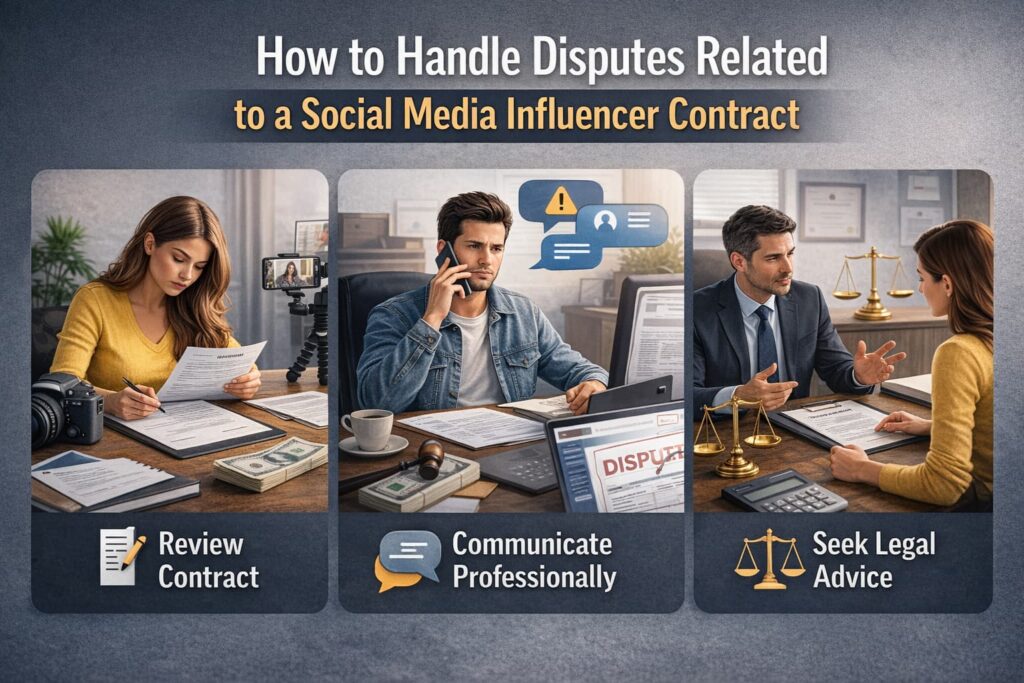
Disputes related to a social media influencer contract can arise over payment, content approval, deadlines, or usage rights. How an influencer handles these conflicts can significantly affect their income, reputation, and future opportunities. The first step is to carefully review the contract to understand each party’s obligations, including payment terms, deliverables, termination rights, and dispute resolution clauses. Many agreements require notice and an opportunity to cure a breach before further action occurs.
Clear and professional communication is often the most effective way to resolve issues early. Influencers should document all communications, deliverables, and approvals in writing to create a clear record if the dispute escalates. If the disagreement continues, influencers should follow the contract’s dispute resolution process, which may require mediation or arbitration before any party files a lawsuit.
It is also vital to avoid self-help measures, such as deleting content or publicly criticizing the brand, as this can exacerbate the dispute and potentially violate contract terms. Instead, influencers should seek guidance from an attorney experienced in digital media or contract law. Legal counsel can assess whether the brand has breached the agreement, negotiate a resolution, or pursue formal remedies if necessary.
How a Business Contracts Lawyer Helps Social Media Influencers
A business contracts lawyer plays a critical role in protecting social media influencers as they navigate brand partnerships, sponsorships, and collaborations. While influencers often focus on content creation and audience engagement, contracts determine how they get paid, how others use their work, and what legal risks they assume. A lawyer ensures these agreements are transparent, fair, and aligned with the influencer’s long-term interests.
One of the primary ways a contracts lawyer helps influencers is by reviewing and negotiating brand agreements. Many contracts are in favor of the company and may include vague deliverables, delayed payment terms, broad exclusivity, or excessive liability. A lawyer can negotiate clearer scopes of work, stronger payment protections, and reasonable exclusivity limits that do not restrict future opportunities.
Intellectual property protection is another key area of focus. A business contracts attorney ensures influencers retain ownership of their original content or receive proper compensation when licensing it to brands. They can limit how long and where a brand may use influencer content and prevent unauthorized reuse in advertising or third-party campaigns.
A lawyer also helps influencers stay compliant with FTC advertising and disclosure rules, thereby reducing the risk of fines or enforcement actions. In addition, contract lawyers address indemnification, termination, and dispute resolution clauses, shielding influencers from unfair legal exposure and sudden cancellations.
When disputes arise, a business contracts lawyer can enforce contract rights, negotiate settlements, or pursue legal remedies if necessary. By providing strategic guidance and legal protection, a business contracts attorney allows influencers to focus on building their brand with confidence, knowing their business relationships are legally sound and they have protection for their creative and financial interests. To get a business contract attorney working for you, contact Gross Law Group today.
Frequently Asked Questions About Social Media Influencer Contracts
What happens if a brand doesn’t pay me?
If payment terms are clear, you can enforce the contract through negotiation, demand letters, or legal action.
What FTC rules apply to influencers?
The FTC requires influencers to clearly disclose sponsored content using hashtags like #ad or #sponsored.
Can I be liable for claims made about a product?
Influencers can face liability for making false or misleading statements, even if the brand provides them. Contracts should include indemnification provisions and clearly define who is responsible for product claims and liabilities.