A DUI charge in Florida sets in motion two separate processes: a criminal case that determines penalties like fines and jail time, and an administrative process with the Department of Highway Safety and Motor Vehicles (FLHSMV) that deals with your license suspension. The penalties are tiered based on your record and the specifics of the incident.
For a standard first offense, you are looking at fines between $500 and $1,000, up to six months in jail, and a license revocation of six months to one year. However, factors like your blood alcohol concentration (BAC) or having a minor in the vehicle significantly increase these penalties.
Recent changes to Florida law have introduced stricter penalties for refusing a breathalyzer, which adds another layer of difficulty.
If you have questions about the specifics of your DUI charge, call us. Our DUI lawyers are here to provide clarity. Contact Gross Law Group for a straightforward assessment of your situation at (888) 858-1505 .
Table of contents
- Key Takeaways for Florida DUI Penalties
- What Happens After a First-Time DUI Arrest?
- Will I Lose My License Immediately After a DUI Arrest?
- I Refused the Breathalyzer. What Does That Mean Now?
- Are the Penalties Worse If My BAC Was High or a Child Was in the Car?
- What If This Isn't My First DUI?
- The Hidden Consequences: How a DUI Affects Your Life
- How Gross Law Group Defends Against DUI Charges
- Frequently Asked Questions About Florida DUI Penalties
- Don’t Face These Penalties Alone
Key Takeaways for Florida DUI Penalties
- A DUI triggers two separate cases. You must defend yourself in criminal court and also fight an administrative license suspension from the FLHSMV, which requires you to act within 10 days of your arrest to challenge it.
- Penalties increase with aggravating factors. A high BAC (.15 or above), having a minor in the car, or causing an accident will lead to mandatory enhanced penalties, including higher fines, more jail time, and a required ignition interlock device.
- Refusing a breathalyzer has serious consequences. A first-time refusal results in a one-year license suspension, and a second refusal is a separate misdemeanor crime, meaning you face two charges from one traffic stop.
What Happens After a First-Time DUI Arrest?
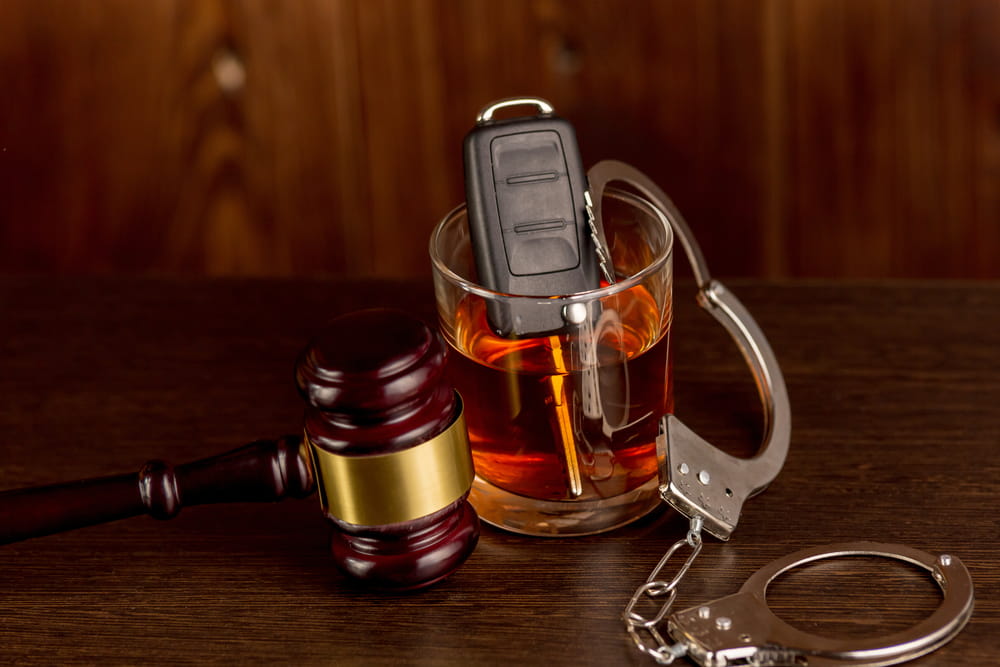
The most common question we hear is, "This is my first time in trouble; what am I actually facing?" A standard first DUI is a misdemeanor, but the penalties are still disruptive. You must understand each component of a potential sentence.
Here is a clear breakdown of what to expect for a first conviction under Florida Statute § 316.193:
- Fines: The base fine is set between $500 and $1,000. This amount does not include court costs, fees for DUI school, or other related expenses, which substantially increase the total financial burden.
- Jail Time: The law allows for a sentence of up to six months in jail for a first offense. The likelihood of serving significant jail time depends on the specific facts of your case, but it remains a possibility.
- Probation: A period of probation, commonly up to one year, is a standard component of a first-time DUI sentence. Probation requires you to complete several conditions, such as regular check-ins with a probation officer, paying all fines and fees, and finishing any court-ordered programs.
- License Revocation: A conviction results in a driver's license revocation lasting from 180 days to one year. This is a separate penalty from the administrative suspension that begins just days after your arrest.
- DUI School: Before your license is fully reinstated, you must complete a Level 1 DUI substance abuse course. This includes an evaluation to determine if further treatment is recommended.
- Community Service: The law requires a mandatory 50 hours of community service for a first DUI conviction.
- Vehicle Impoundment: Your vehicle will likely be impounded or immobilized for 10 days, a period that does not overlap with any jail sentence.
While these penalties are set by statute, the final outcome is not. The right legal strategy influences the result. An attorney reviews the evidence, from the traffic stop to the chemical test, to identify weaknesses in the case against you.
Will I Lose My License Immediately After a DUI Arrest?
After a DUI arrest, you are likely holding a citation that acts as a temporary driving permit. But for how long? The clock is ticking on your driving privileges, and you have a very short window to act.
Florida’s system is confusing because there are two separate ways your license is suspended following a DUI arrest.
The Administrative Suspension
This suspension is initiated by the Florida Department of Highway Safety and Motor Vehicles (FLHSMV), not the criminal court. It happens immediately if you had a Blood Alcohol Concentration (BAC) of .08 or higher or if you refused to submit to a chemical test. From the date of your arrest, you have only 10 days to formally request a review hearing to challenge this suspension. If you do nothing, your license will be automatically suspended once the 10-day permit on your citation expires.
The Criminal Suspension
This second suspension occurs only if you are formally convicted of the DUI charge in court. While it is a separate penalty, it typically runs concurrently with the administrative suspension. However, securing a positive result in your administrative hearing does not guarantee the same outcome in your criminal case, and vice versa.
This 10-day window is the first and most time-sensitive deadline you face. We will immediately file the necessary paperwork to challenge the administrative suspension. This action may allow you to obtain a temporary hardship permit to drive for business or employment purposes while we handle the formal review hearing and begin building a defense for your criminal case.
I Refused the Breathalyzer. What Does That Mean Now?
You were asked to take a breath, blood, or urine test and you said no. This decision carries significant administrative and potential criminal penalties.
Under Florida’s “implied consent” law, all drivers have already consented to such a test simply by operating a vehicle in the state. Refusing to comply brings its own set of penalties separate from the DUI charge itself.
First Refusal Penalties
A first-time refusal to submit to a lawful test triggers a one-year license suspension. For the first 90 days of this suspension, you will not be eligible for a hardship license. This penalty is purely administrative and happens regardless of the outcome of your criminal DUI case.
Penalties for a Second Refusal
A second or subsequent refusal is a first-degree misdemeanor. This means you now face a separate criminal charge in addition to your DUI charge. The potential penalties for the refusal alone include up to one year in jail and a $1,000 fine. It also results in an 18-month license suspension.
The Refusal Is Used Against You
The prosecution will use your refusal as evidence of "consciousness of guilt" during your DUI trial. A prosecutor will argue that you refused the test because you knew you were intoxicated and were trying to hide the evidence.
Facing two separate charges requires a defense strategy that addresses both the DUI and the refusal. Our firm has years of experience examining the circumstances of a traffic stop, including whether the officer followed proper procedure and made a lawful request for a chemical test. If the request was unlawful, it is grounds to challenge both charges.
Are the Penalties Worse If My BAC Was High or a Child Was in the Car?

Florida law defines certain conditions as "aggravating factors" that automatically increase minimum penalties, even for a first offense. This isn’t left to a judge’s discretion; the statutes require tougher sentences when these factors are present.
A High BAC
If your BAC was .15 or higher, nearly double the legal limit, the penalties are enhanced under Florida Statute § 316.193.
- Fines: The fine range for a first offense increases to $1,000–$2,000.
- Jail Time: The potential maximum sentence increases from six months to nine months.
- Ignition Interlock Device (IID): An IID must be installed in your vehicle for at least six continuous months at your own expense. An IID is a breathalyzer device connected to your car's ignition that prevents it from starting if it detects alcohol.
A Minor in the Vehicle
If you were driving with a passenger under the age of 18, the penalties are enhanced to the same level as having a high BAC. Fines are elevated to $1,000–$2,000, potential jail time increases to nine months, and an IID is mandatory for at least six months.
An Accident Causing Property Damage or Injury
If the DUI incident resulted in an accident, the charges become more severe.
- Property Damage or Minor Injury: The charge is elevated to a first-degree misdemeanor, with a maximum penalty of one year in jail and a $1,000 fine.
- Serious Bodily Injury: This escalates the charge to a third-degree felony. A conviction carries a potential sentence of up to five years in prison. "Serious bodily injury" is defined as an injury creating a substantial risk of death, serious disfigurement, or prolonged impairment of a body part or organ.
What If This Isn't My First DUI?
Florida's penalties for repeat DUI offenders are significantly harsher, and the system uses a "lookback" period to determine the severity of the sentence. The court examines your driving record to see if prior DUI convictions occurred within a specific timeframe.
Second DUI Conviction
- If Within 5 Years of a Prior Conviction: This triggers a mandatory jail sentence of at least 10 days. The fines increase to a range of $1,000–$2,000, and your license will be revoked for a minimum of five years. An Ignition Interlock Device is required for at least one year.
- If Outside of 5 Years: While still more serious than a first offense, the penalties are less severe than for a second offense within 5 years. Mandatory jail time is not required, although a sentence of up to nine months is possible.
Third DUI Conviction
- If Within 10 Years of a Prior Conviction: This is charged as a third-degree felony. It carries a mandatory minimum of 30 days in jail and up to five years in prison. Fines range from $2,000 to $5,000, and you face a license revocation of at least 10 years.
- If Outside 10 Years: The charge is a misdemeanor but with increased penalties compared to a second offense, including higher potential fines and jail time.
Fourth or Subsequent DUI
Any fourth DUI, regardless of when the prior offenses occurred, is a third-degree felony. The penalties include up to five years in prison and a potential permanent revocation of your driver's license.
The Hidden Consequences: How a DUI Affects Your Life
The court-ordered penalties are only one part of the story. A DUI conviction creates ripples that affect your life for years, long after the fines are paid and the probation is over.
These collateral consequences impact your finances, career, and even your freedom to travel.
- Insurance Rates: Your car insurance premiums are almost certain to rise dramatically. In some cases, your provider may drop your coverage altogether, forcing you to seek high-risk insurance at a much greater cost.
- Employment: Many jobs, particularly those that require driving or operating machinery, require a clean driving record. A DUI conviction is grounds for termination or makes it much more difficult to find a new job.
- Professional Licenses: Individuals with professional licenses—such as nurses, pilots, lawyers, or commercial drivers—may face disciplinary action from their respective licensing boards, which could jeopardize their careers.
- Travel: Some countries, most notably Canada, may deny entry to individuals with a DUI conviction on their record, complicating both personal and business travel.
How Gross Law Group Defends Against DUI Charges
A DUI arrest does not have to end in a conviction. If you’re wondering why to hire a DUI lawyer, the answer lies in the details. Our practice focuses on a thorough examination of every piece of evidence to ensure your rights are fully protected.
We investigate:
- The Traffic Stop: Did the officer have a legally valid reason to pull you over in the first place?
- The Investigation: Were the field sobriety exercises administered according to established standards? Were you a proper candidate for these tests?
- The Chemical Test: Was the breathalyzer machine properly calibrated and maintained? Was the blood or urine sample collected and handled according to strict legal and medical protocols?
Our role is to hold the prosecution to its high burden of proof. We work to identify any procedural errors or violations of your rights that form the basis of a strong defense.
Frequently Asked Questions About Florida DUI Penalties
Can I get a DUI for driving after taking prescription medication?
Yes. Florida's DUI law, Florida Statute § 316.193, applies to impairment by any chemical or controlled substance, not just alcohol. If a legally prescribed medication impairs your normal faculties, you may be arrested and charged with DUI.
What is the "Zero Tolerance" law for drivers under 21?
For drivers under the age of 21, the legal BAC limit is .02, not .08. Under Florida's Zero Tolerance law, a driver under 21 with a BAC of .02 or higher will have their license administratively suspended for six months for a first offense.
Do out-of-state DUIs count in Florida?
Yes. Florida recognizes and counts prior DUI convictions from other states when determining penalties for a new offense. This means an out-of-state conviction could cause you to be sentenced as a repeat offender in Florida.
Is it possible to get a DUI charge reduced to a lesser offense?
In some circumstances, it is possible to negotiate a plea to a lesser charge, such as reckless driving. This outcome, sometimes called a "wet reckless," is not available in every case. Its possibility depends entirely on the specific facts of your situation, the strength of the evidence, and the policies of the local state attorney's office.
What is a "DUI with Serious Bodily Injury"?
This is a third-degree felony charge under Florida law. It applies when a person driving under the influence causes an accident that results in a "physical condition that creates a substantial risk of death, serious personal disfigurement, or protracted loss or impairment of the function of any bodily member or organ."
Don’t Face These Penalties Alone

Seeing the list of potential penalties is unsettling. It’s easy to feel like the case is already closed, but an arrest is not a conviction. Understanding the common mistakes to avoid in a DUI case can make a significant difference in how your case unfolds. You have the right to a defense, and the legal system has strict rules the prosecution must follow. Our role is to make sure they do.
Call Gross Law Group today for a clear explanation of your case and how we will help. Your conversation is confidential. Contact us at (888) 858-1505.